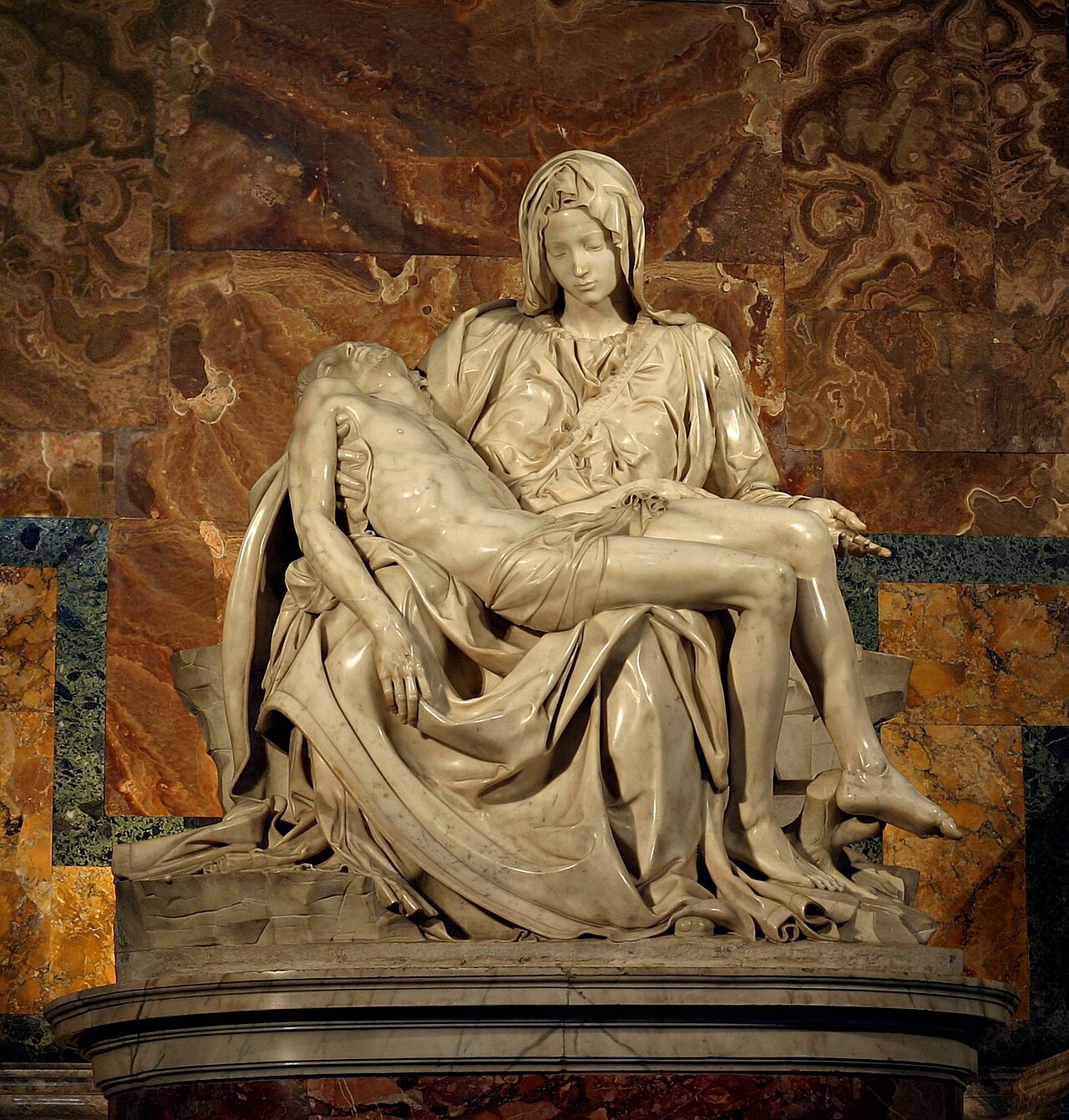
Decoding the Pieta: Mary Cradling Her Son in Christian Art
The realm of Christian art is replete with images that stir the soul, provoke contemplation, and offer solace. Among these, few are as profoundly moving and universally recognized as the Pieta – a powerful depiction of the Virgin Mary cradling the lifeless body of her son, Jesus, after his crucifixion. This
Holy Picture Of Mary With Jesus Dead On Her Knees is more than just an artistic representation; it is a profound theological statement on grief, sacrifice, and the boundless love between a mother and her child.
The term "Pieta," derived from the Latin word for "piety" or "pity," encapsulates the essence of this scene: Mary's deep sorrow and compassionate embrace of her crucified Son. While not explicitly described in the Gospels, the Pieta emerged as a pivotal theme in Christian art, especially during the medieval period, resonating deeply with the human experience of loss and the theological understanding of Mary's co-redemptive suffering. It invites viewers to share in Mary's profound grief, to ponder the immense sacrifice of Christ, and to find meaning in suffering.
The Profound Origins and Evolution of the Pieta Theme
The concept of Mary cradling her dead Son, though absent from direct biblical narration, evolved organically within devotional practices. Early Christian art focused more on the triumphant Christ, but as the centuries progressed, particularly in the wake of significant social upheavals and epidemics like the Black Death, there was a growing humanization of religious figures. Devotional practices shifted towards a more personal, empathetic identification with the suffering of Christ and his mother.
The Pieta theme gained significant traction in Germany in the 13th and 14th centuries, where it was known as the "Vesperbild" (evening image), likely referring to the evening hours when Christ's body was taken down from the cross. These early depictions were often stark, emphasizing Mary's raw anguish with sharp, angular forms and exaggerated expressions of grief. They served a vital purpose: to evoke strong emotional responses from the faithful, encouraging meditation on Christ's passion and Mary's sorrow. This particular
Holy Picture Of Mary With Jesus Dead On Her Knees became a tangible focus for personal lamentation and prayer, allowing the devotee to connect intimately with the profound pain endured by the Mother of God.
Over time, as art evolved through the Renaissance and beyond, artists continued to explore and reinterpret the Pieta. The dramatic intensity of the Gothic period gave way to the classical grace and idealized forms of the Renaissance, most famously exemplified by Michelangelo's masterpiece. Despite stylistic shifts, the core emotional and spiritual message of the Pieta endured, solidifying its place as one of the most enduring and impactful themes in Christian iconography. It remains a timeless testament to human sorrow and divine love, continually challenging artists to capture the inexpressible.
Symbolism and Emotional Resonance: Why the Pieta Endures
The enduring power of the Pieta lies in its layered symbolism and profound emotional resonance. It speaks to universal themes of love, loss, sacrifice, and redemption, transcending its specific religious context to touch the core of human experience.
- Motherly Love and Grief: At its heart, the Pieta is an image of a mother mourning her child. This is a primal, universally understood sorrow that evokes deep empathy. Mary's sorrow is not just personal; it represents the suffering of all mothers who have lost children and, by extension, the suffering of humanity. The way she cradles Jesus, often with tenderness and resignation, speaks volumes about unconditional love.
- Sacrifice and Redemption: Jesus's lifeless body is a poignant reminder of his ultimate sacrifice for the salvation of humanity. The wounds of the crucifixion—the nail marks, the spear wound—are often subtly yet powerfully depicted, serving as visual reminders of his suffering and atonement. Mary, by holding him, becomes a witness and a participant in this redemptive act, embodying the church's shared suffering.
- Humanity and Divinity: The Pieta balances the humanity of Christ (his death) with his divinity (his ultimate purpose). Mary's grief highlights his human nature, making his sacrifice more relatable and profound. Yet, in many interpretations, Mary's expression, while sorrowful, also conveys a sense of serene acceptance or understanding of God's will, linking the human tragedy to divine plan.
- Devotional Focus: For believers, this Holy Picture Of Mary With Jesus Dead On Her Knees serves as a powerful aid for meditation and prayer. It encourages reflection on the passion of Christ, fostering a deeper connection to the events of Holy Week and the ultimate meaning of faith. It offers a space for communal and individual lamentation, acknowledging suffering while pointing towards hope in resurrection.
Understanding these layers helps us appreciate why artists continue to revisit this theme and why it resonates so deeply across cultures and centuries. It's a testament to the universal language of art in conveying complex spiritual truths and raw human emotion.
Iconic Interpretations and Artistic Ingenuity
While countless artists have rendered the Pieta, certain works stand out for their artistic ingenuity and emotional impact.
*
Michelangelo's *Pieta* (St. Peter's Basilica, Vatican City): Undoubtedly the most famous, Michelangelo's marble masterpiece (c. 1498–1499) revolutionized the depiction of the theme. Commissioned for the French cardinal Jean de Bilhères, it presents a youthful, serene Mary holding a perfectly sculpted, seemingly sleeping Jesus. Michelangelo's innovative choice to depict Mary as younger than her Son was controversial but intentional, symbolizing her eternal purity and virginity, untarnished by sin and grief. The flowing drapery, the delicate balance, and the emotional restraint contribute to its unparalleled beauty and theological depth. It is a stunning example of a
Holy Picture Of Mary With Jesus Dead On Her Knees that transcends mere depiction to become an object of awe and reverence.
*
Rogier van der Weyden's *Pietà* (c. 1441): In stark contrast to Michelangelo's serenity, early Northern European Pietas often emphasized visceral grief. Van der Weyden's painting, with its sharp lines and poignant expressions, captures Mary's profound sorrow alongside John the Evangelist and Mary Magdalene. The vivid colors and detailed textures typical of early Netherlandish painting draw the viewer into the raw emotional landscape of the scene.
*
El Greco's *Pietà* (c. 1585-1590): El Greco's distinctive style—elongated figures, dramatic lighting, and intense spirituality—brings a unique fervor to the Pieta. His version is often characterized by a more ethereal and spiritual suffering, less about physical anguish and more about the transcendent grief of the divine.
These diverse interpretations highlight how artists through different eras and regions adapted the Pieta to reflect contemporary sensibilities and theological understandings. Each rendition, whether stark or serene, aims to connect the viewer to the profound moment of Mary cradling her crucified Son, fostering a powerful devotional experience.
Tips for Appreciating and Understanding the Pieta
To truly grasp the profound impact of a
Holy Picture Of Mary With Jesus Dead On Her Knees, consider these points when encountering a Pieta:
1.
Observe the Composition: How is Mary positioned in relation to Jesus? Is she monumental or frail? Is there a sense of balance or dynamic tension? The arrangement of figures communicates much about the artist's message.
2.
Analyze Facial Expressions and Gestures: Is Mary's face serene, anguished, or resigned? How do her hands communicate her feelings—are they open in lamentation, gently cradling, or clasped in prayer? These details are key to conveying emotion.
3.
Examine the Details of Christ's Body: Note the wounds, the pallor of his skin, and the posture of his limbs. These elements emphasize his humanity and the reality of his sacrifice.
4.
Consider the Historical Context: Understand when and where the artwork was created. How might the prevailing religious, social, or artistic trends of that era have influenced the artist's interpretation?
5.
Reflect on Personal Resonance: Allow yourself to feel the emotional weight of the image. What emotions does it evoke in you? How does it connect to your own experiences of love, loss, or faith?
6.
Look for Symbolism: Are there other figures present (e.g., John, Mary Magdalene)? Are there background elements or colors that carry symbolic meaning?
By engaging with these aspects, you can move beyond simply seeing a "Holy Picture Of Mary With Jesus Dead On Her Knees" to truly *experience* the depth and artistry of the Pieta.
Conclusion: The Enduring Power of a Mother's Grief
The Pieta, as a quintessential
Holy Picture Of Mary With Jesus Dead On Her Knees, remains one of the most powerful and emotive subjects in Christian art. It captures a moment of unbearable sorrow yet also profound love and faith. From the stark, expressive Vesperbilder of the Gothic era to the serene majesty of Michelangelo's Renaissance masterpiece, and the dramatic flair of the Baroque, artists have continuously sought to encapsulate the ineffable grief of Mary holding her crucified Son. This image serves not only as a testament to the sacrifice of Christ but also as a universal symbol of a mother's pain and the enduring strength of love in the face of loss. Its ability to transcend time and culture speaks volumes about its deep human and spiritual resonance, making it an eternal source of contemplation, solace, and artistic inspiration.