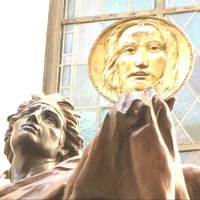
Unveiling the Profound Image: Mary Cradling Her Crucified Son
Among the most poignant and emotionally charged images in Christian art is the Pieta, a powerful depiction of the Virgin Mary cradling the body of her son, Jesus, after his crucifixion. This Holy Picture Of Mary With Jesus Dead On Her Knees encapsulates a moment of profound grief, sacrifice, and divine love. It's a scene that transcends religious boundaries, speaking to the universal themes of loss, maternal sorrow, and ultimate redemption. While the term "Pieta" itself translates from Italian as "pity" or "compassion," the visual representation evokes far more complex emotions, inviting viewers to reflect on the ultimate sacrifice made for humanity and the unparalleled anguish of a mother.
What is the Pieta? Understanding the Iconic Depiction
Defining the Scene: Mary and the Crucified Christ
At its core, a Pieta is a subject in Christian art that meticulously details Mary cradling her crucified Son. The artistic interpretation often focuses on the physical state of Christ, depicting his body after being removed from the cross. Typically, he is portrayed with a bowed head, sometimes crowned or capped, reflecting the indignity and suffering of his passion. His body, often shown suspended or supported, such as hanging by his left arm in some interpretations, conveys the weight and lifelessness that followed his agony on the cross. This deeply moving scene, therefore, is not merely a historical representation but a powerful meditation on the aftermath of an unthinkable event.
The visual impact of this Holy Picture Of Mary With Jesus Dead On Her Knees is designed to evoke a strong emotional response. It asks us to confront the reality of death and the depth of sorrow experienced by those left behind. The delicate balance between the lifeless form of Christ and the living, yet grief-stricken, figure of Mary creates a compelling narrative of human suffering intertwined with divine purpose. For a deeper dive into the artistic representations, consider reading Decoding the Pieta: Mary Cradling Her Son in Christian Art.
Beyond Grief: The Multifaceted Symbolism
While grief is undeniably central to the Pieta, its symbolism extends much further. It is a testament to Mary's enduring faith and her unique role in salvation history. As the mother who bore Christ, nurtured him, and witnessed his miracles, she now bears the unbearable burden of his death. Her posture, whether gazing heavenward, lost in sorrow, or with a serene acceptance, communicates profound theological truths. Some artists, for example, have subtly woven in other symbolic elements within the broader composition, such as the 'Lamb of God' motif, which when united with Mary's image, further emphasizes Christ's sacrificial role. This intricate layering of imagery transforms a moment of sorrow into a profound statement about atonement, love, and the promise of resurrection.
The Biblical Foundation and Mary's Enduring Sorrow
The Via Dolorosa and Calvary's Aftermath
Though the exact scene of Mary cradling Jesus immediately after his descent from the cross is not explicitly detailed in the Gospels, it is a profoundly logical and emotionally resonant moment inferred from scriptural accounts. The Gospels describe Mary standing at the foot of the cross during the crucifixion, a witness to her Son's agonizing death (John 19:25-27). Her presence there, often referred to as Mary's seventh sorrow, sets the stage for the Pieta. Imagine the unbearable wait, the piercing grief, as she watched the life drain from her Son. Once Jesus's body was taken down, likely by Joseph of Arimathea and Nicodemus, it would have been natural for his mother to receive him, to hold him one last time before his burial. This human instinct for a mother to embrace her deceased child forms the emotional bedrock of the Pieta.
This Mary's Grief: Exploring the Pieta and Crucified Son Imagery highlights the depth of Mary's sorrow, a sorrow that has made her known as the Mater Dolorosa, or Mother of Sorrows. The Pieta is an artistic manifestation of this title, providing a visual meditation on her suffering.
Mary's Role: Mother of Sorrows (Mater Dolorosa)
The Pieta serves as a powerful reminder of Mary's journey of sorrow, prophesied by Simeon when he told her a "sword will pierce your own soul too" (Luke 2:35). Her suffering is unique; she is not only grieving a son but the Son of God, the Messiah she had nurtured and protected. This Holy Picture Of Mary With Jesus Dead On Her Knees places her at the heart of Christian empathy, making her a figure of immense solace for those who experience loss. Her composure in these artworks, whether utterly distraught or serenely accepting, offers a model of faith and endurance in the face of unimaginable pain. It underscores the belief that even in the darkest moments, faith can provide strength and a glimmer of hope for ultimate triumph over death.
Masterpieces and Interpretations: A Look at the Pieta in Art
Michelangelo's Iconic Pieta: A Benchmark
When one speaks of the Pieta, Michelangelo's magnificent sculpture in St. Peter's Basilica immediately comes to mind. Carved from a single block of Carrara marble, it is a masterpiece of Renaissance art, renowned for its exquisite detail, emotional depth, and serene beauty. Michelangelo portrayed Mary as youthful and idealized, an artistic choice meant to convey her purity and perpetual virginity rather than an accurate chronological age. The composition is masterful; Mary's drapery flows elegantly, supporting the seemingly weightless body of Christ, whose lifeless form is rendered with anatomical precision. The harmony and tenderness in this depiction make it a quintessential example of the Decoding the Pieta: Mary Cradling Her Son in Christian Art motif, influencing countless artists for centuries.
Variations Across Cultures and Eras
While Michelangelo's Pieta is arguably the most famous, artists across different eras and cultures have interpreted this profoundly moving theme in myriad ways, each adding unique layers of meaning to the Holy Picture Of Mary With Jesus Dead On Her Knees.
- German Vesperbild: Particularly prominent in late medieval Germany, these wooden or stone sculptures often feature a more stark and emotionally direct portrayal of Mary's grief. Christ's wounds are often exaggerated, and Mary's face is contorted in agony, emphasizing the raw human suffering.
- Baroque Pietas: Artists like Bernini and Rubens imbued their Pietas with dramatic intensity, dynamic compositions, and heightened emotional expression, characteristic of the Baroque period. Light, shadow, and movement are used to amplify the pathos.
- Modern Interpretations: Contemporary artists continue to explore the Pieta, sometimes placing it in modern contexts or using unconventional materials to reflect ongoing societal sorrows and the timelessness of maternal grief and sacrifice.
Each rendition, whether focusing on Mary's serene acceptance or her harrowing anguish, invites viewers into a deep contemplation of the sacred mystery of Christ's sacrifice and his mother's profound love. Observing these variations can be a powerful experience, revealing the enduring relevance and adaptability of this iconic image.
The Enduring Resonance of the Pieta: A Spiritual Reflection
Comfort in Shared Grief and Human Connection
The enduring power of the Pieta lies in its universal appeal. While rooted deeply in Christian theology, the image of a mother grieving her dead child transcends religious dogma, touching the deepest chords of human empathy. It offers comfort to those who have experienced loss, validating their sorrow and providing a visual representation of shared human experience. This Holy Picture Of Mary With Jesus Dead On Her Knees reminds us that even divine figures experience profound suffering, making their story relatable and their comfort accessible.
Hope Amidst Despair: A Path to Redemption
Despite its overt depiction of death and sorrow, the Pieta is not solely an image of despair. For believers, it is an essential step on the path to resurrection. It signifies the completion of Christ's earthly sacrifice, paving the way for his triumph over death. Mary's presence, her steadfast love even in the darkest hour, serves as a beacon of hope and resilience. It suggests that even in the face of ultimate loss, there is spiritual strength to be found, and that suffering, when united with faith, can lead to redemption and new life. It encourages us to look beyond the immediate pain towards the promise of eternal life.
Practical Tips for Reflection
When contemplating a Pieta, whether in a museum, a church, or a reproduced image, consider these tips to deepen your appreciation and reflection:
- Observe the Details: Pay close attention to the artist's choices—Mary's expression, Christ's wounds, the drape of the cloth, the materials used. Each detail contributes to the overall message.
- Ponder the Emotions: Allow yourself to feel the empathy the artwork evokes. What emotions does Mary convey? What do you feel seeing the lifeless body of Jesus?
- Connect to Personal Faith or Human Experience: Reflect on how the themes of loss, love, sacrifice, and hope resonate with your own life experiences or spiritual beliefs.
- Research the Context: Understanding the historical, cultural, and artistic context in which a specific Pieta was created can offer richer insights into its meaning and impact.
The Pieta, as a Holy Picture Of Mary With Jesus Dead On Her Knees, is more than just an artwork; it is a profound spiritual experience. It challenges us to confront the reality of suffering while simultaneously offering solace and a powerful testament to enduring love and faith. Its timeless appeal continues to inspire contemplation, offering comfort and a message of hope that transcends generations.